Blacklegged / deer tick
Ixodes scapularis
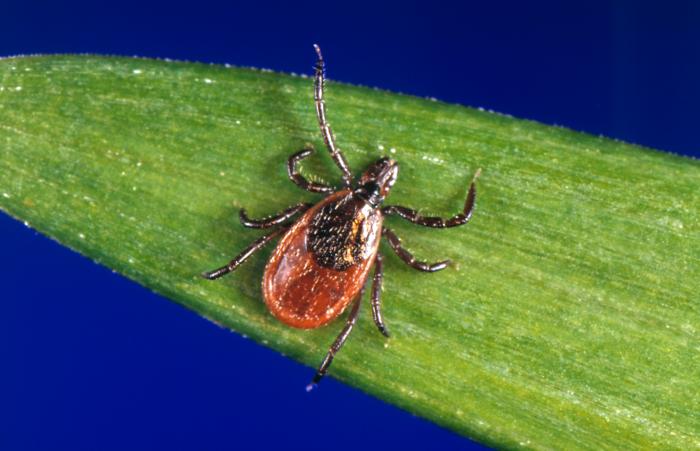
Dark legs and front shield; adult females can show a reddish-brown rear body. Compare several traits, not color alone.
CDC / Michael L. Levin; photo Jim Gathany. Public-domain source and full image
Explore a small reference set for the contiguous United States. Compare visible traits and life stages without treating a chart match as a species diagnosis or disease assessment.
These examples are adult females, except where explicitly labeled. The filters narrow reference cards; they do not identify your specimen or assess infection. Images are enlarged and are not shown at life size.
5 reference examples. Region is approximate; ticks can occur outside mapped ranges.
Ixodes scapularis
Dark legs and front shield; adult females can show a reddish-brown rear body. Compare several traits, not color alone.
CDC / Michael L. Levin; photo Jim Gathany. Public-domain source and full image
Ixodes pacificus
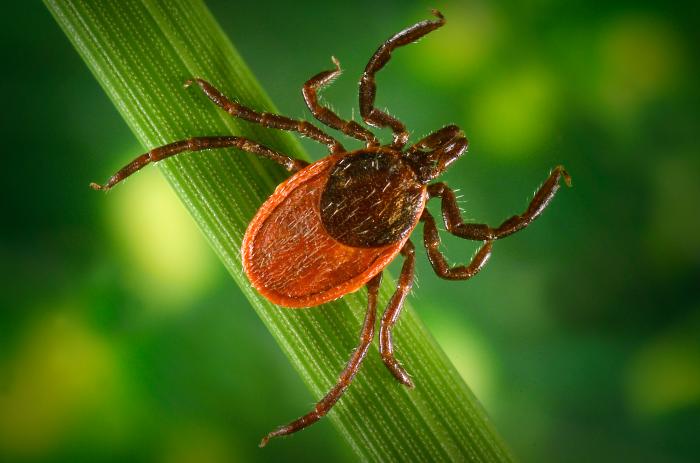
An adult female blacklegged-type tick from the western reference set. Similar-looking Ixodes ticks may need microscopic characters.
CDC / William L. Nicholson; photo James Gathany. Public-domain source and full image
Amblyomma americanum
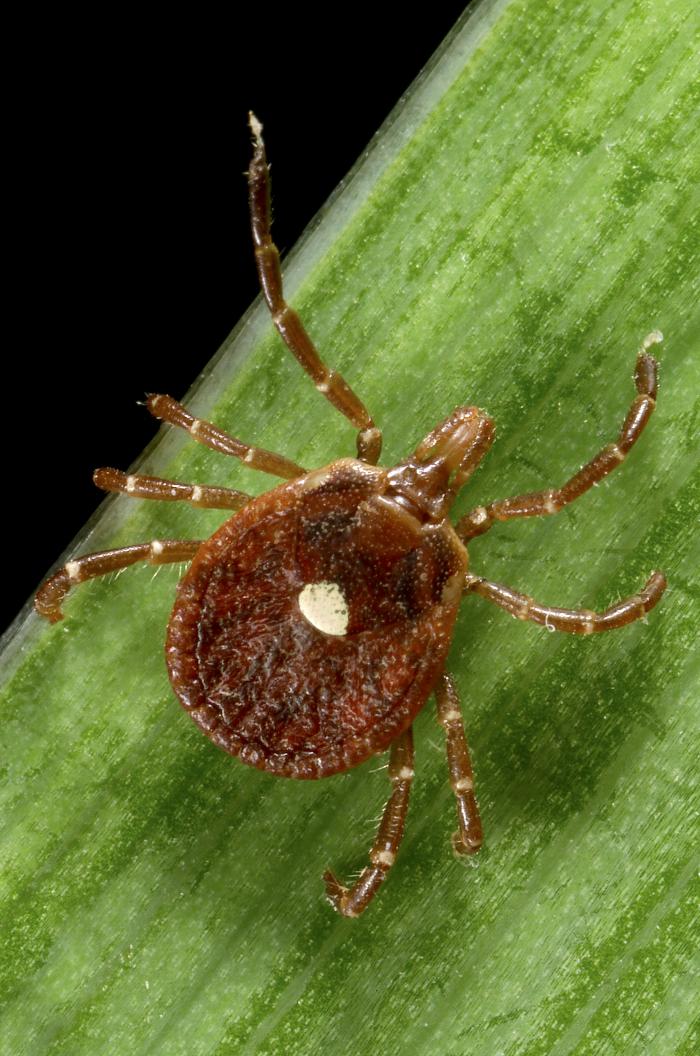
The adult female can show one pale spot on her back. Males and immature ticks do not have this same female pattern.
CDC / Amanda Loftis, William Nicholson, Will Reeves, Chris Paddock; photo James Gathany. Public-domain source and full image
Dermacentor variabilis
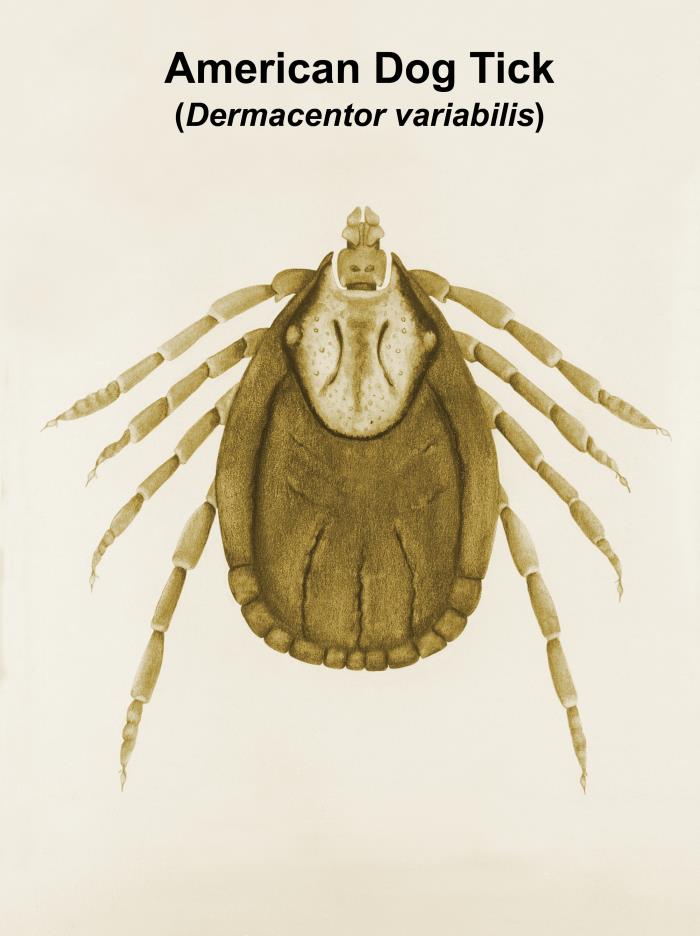
Reference illustration of the ornate front shield of an adult female. Related western Dermacentor ticks can look similar.
CDC / Henry D. Pratt. Public-domain source and full image
Rhipicephalus sanguineus
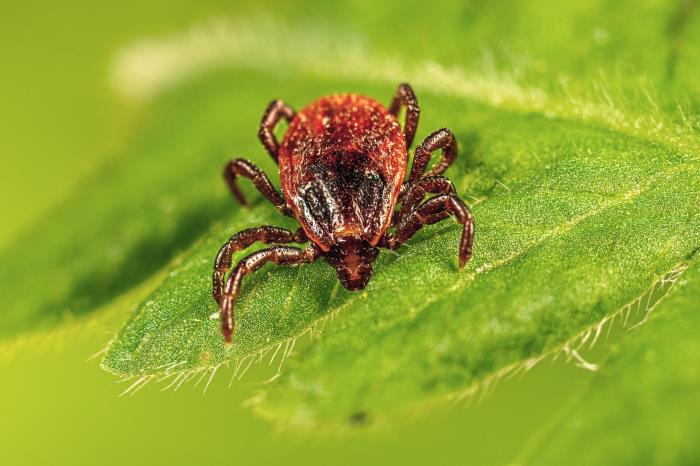
Brown coloration and a dog-associated setting are only clues. This group occurs widely and needs closer examination to confirm.
CDC / Division of Vector-Borne Diseases; photo Lauren Bishop. Public-domain source and full image
Compare dark versus ornate shield patterns only when clearly visible on an adult. American dog, Rocky Mountain wood, lone star and blacklegged ticks have lookalikes; this simplified reference set is not a diagnostic key.
Egg, larva, nymph and adult are different stages. A fed tick can look larger and rounder than an unfed one. Use a ruler beside a detached specimen when safe; screen size and a photo without scale cannot establish its real size or attachment duration.
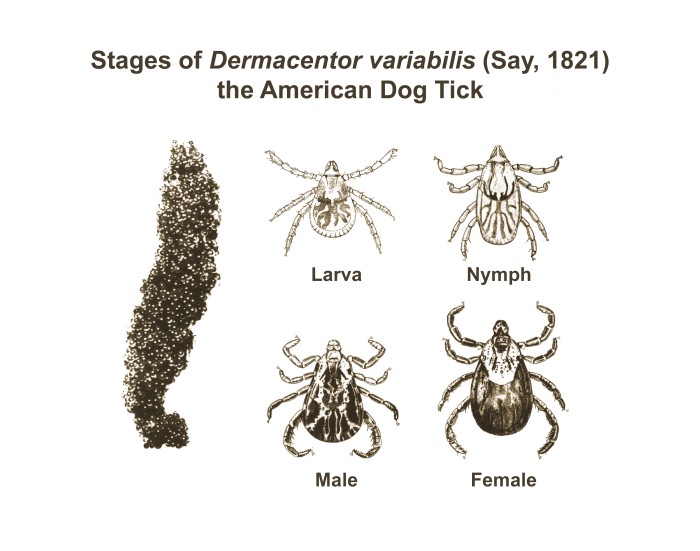
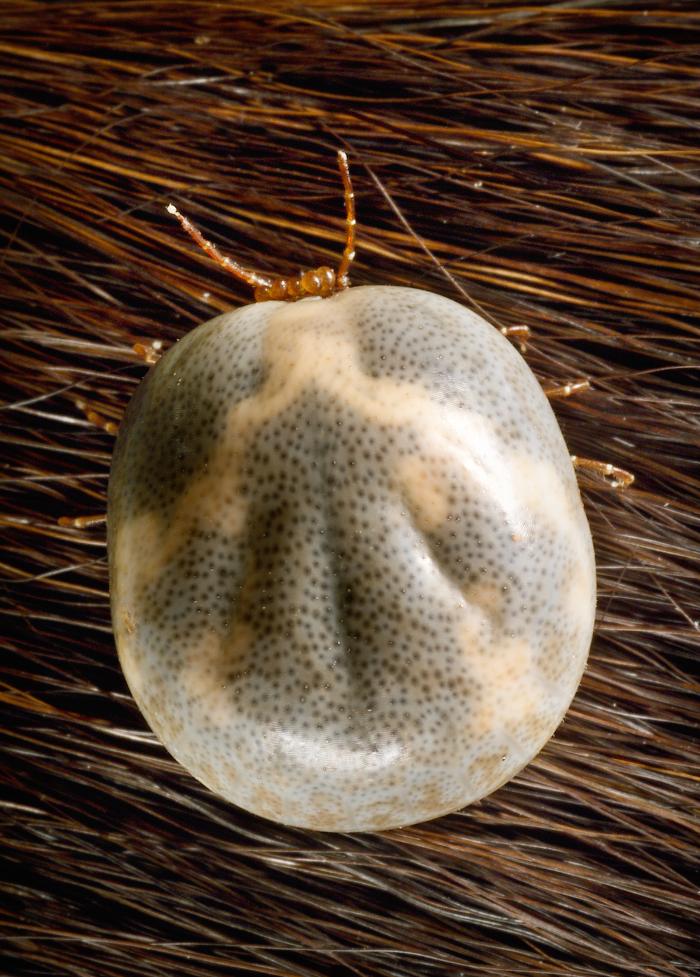
Source images: CDC Public Health Image Library, public domain and available there without charge. Use of these materials does not imply endorsement by CDC, HHS or the U.S. Government. The original images are reproduced without substantive alteration.
Do not wait for a chart match before addressing an attached tick. Follow current public-health removal guidance; for a pet or an uncertain attached object, ask a veterinarian. The appearance or species of a tick cannot show whether it carries a pathogen.
CDC: what to do after a tick biteA reference photograph shows one specimen, sex and feeding state. An adult-female example is not a universal picture of every member of that species. Keep uncertain observations uncertain.
The East and West filters use broad contiguous-U.S. context. They are incomplete and not range boundaries: travel and changing distributions can put ticks outside a familiar location.
Leg counts, markings and mouthparts may be hidden, damaged or too small in an ordinary photograph. Engorgement changes appearance. A pale patch caused by glare is not the same evidence as a resolved anatomical marking.
Use current public-health guidance for an attached tick. For pets, speak with your veterinarian. A photo or chart cannot diagnose a skin lesion, measure infection risk, or establish how long a tick was attached.
No. Neither a species match nor a photograph determines whether an individual tick carries a pathogen or whether transmission occurred.
No. Images resize to fit your screen. Use a physical ruler or an appropriately scaled specimen reference; do not measure an on-screen tick.
The filtered comparison cards show adult females. The life-stage illustration adds context, but immature and male identification needs suitable references or an expert.
No. This chart cannot diagnose attached bumps. If unsure, do not cut or pull the object; ask a veterinarian.
Use Tick Detector - Tickzen for the full guided result after this quick check.